 blog
Pet Friendly Apartments Lawton OK: 2026 Renter's Guide
Table of Contents
- What Pet Friendly Apartments in Lawton, OK Actually Allow
- Dog-Friendly Apartments in Lawton: Rules, Limits, and What to Verify
- Pet Fees and Pet Rent: What They Cover and How to Budget
- Apartment Pet Policy Questions to Ask Before You Apply
- A Pet-Friendly Apartment Checklist for Tour Day
- Floor Plans, Amenities, and Storage for Renters With Pets
- Assistance Animals and Fair Housing Protections
- Conclusion: How to Choose Pet Friendly Apartments in Lawton, OK
- Frequently Asked Questions
Last Updated: October 16, 2026
What Pet Friendly Apartments in Lawton, OK Actually Allow
Searching for pet friendly apartments in Lawton, OK usually starts with the same frustration: listings say "pets welcome," then the lease adds breed limits, weight caps, and a monthly pet rent you never saw coming. This guide breaks down what pet-friendly rental housing in Lawton typically permits, what it costs, and how to verify a policy before you apply. Most renters ask about the deposit first. The smarter question is what the policy actually restricts.
A pet-friendly apartment is a rental unit where the lease explicitly permits one or more household animals, subject to stated limits on species, breed, weight, and number. That definition matters because "pet friendly" is a marketing phrase, not a legal standard. A property can advertise itself as dog-friendly and still exclude certain breeds or cap animals at 25 pounds.
Three things decide whether your pet qualifies:
- Species and breed restrictions, which vary by property and insurer
- Weight and count limits, often one or two animals per unit
- Fees, deposits, and recurring pet rent written into the lease
According to HUD guidance on housing and pets, landlords may set reasonable pet rules, but those rules must be applied consistently and disclosed before you sign. Ask for the pet addendum in writing. If a leasing office will not put the policy on paper, treat that as your answer.
Dog-Friendly Apartments in Lawton: Rules, Limits, and What to Verify
Dog-friendly apartments in Lawton generally allow dogs of a stated maximum weight, often with breed exclusions tied to insurance underwriting rather than personal preference. The weight limit is the rule renters trip over most. A property that allows dogs under 40 pounds is not being difficult; it is usually matching its insurance policy.
What most guides miss is that breed lists are frequently set by the property's liability carrier, not the manager. That means a leasing agent may genuinely have no ability to waive a restriction, no matter how well-behaved your dog is. Ask these questions before you fall in love with a floor plan:
- Is the breed restriction set by ownership or by the insurance carrier?
- Is the weight limit per dog or combined across all pets?
- Are there limits on the number of animals per apartment home?
- Does the policy differ for cats, dogs, and small caged animals?
Get the answers in writing, ideally in the pet addendum itself. Verbal assurances do not survive a management change.
Pet Fees and Pet Rent: What They Cover and How to Budget
Pet fees and pet rent are two different charges, and confusing them wrecks a move-in budget. A pet fee is a one-time, non-refundable payment. Pet rent is a recurring monthly charge added to your base rent. A pet deposit is refundable, subject to the same move-out inspection standards as your security deposit.
| Charge | Type | Refundable | What It Typically Covers |
|---|---|---|---|
| Pet fee | One-time | No | Administrative processing, added wear allowance |
| Pet deposit | One-time | Yes, condition-based | Damage beyond normal wear |
| Pet rent | Monthly | No | Ongoing occupancy of the animal |
| Additional deposit | One-time | Yes, condition-based | Higher-risk breeds or multiple pets |
Most listings stop at "pet friendly" and never publish the four line items above, which is exactly why so many renters get surprised at signing. Because pricing varies by property, unit, and lease term, we do not publish pet charges here. Contact the leasing office directly for current amounts and ask for the full move-in cost sheet, including deposit, first month's rent, and any pet line items.
To compare properties fairly, calculate your annual pet cost, not just the move-in number:
- Annual pet cost = (one-time pet fee) + (monthly pet rent x 12) + (any non-refundable portion of the deposit)
- Example: a $300 non-refundable pet fee plus $25/month pet rent equals $600 over a twelve-month lease, before any deposit
- A second pet often doubles the monthly pet rent and may add a separate deposit
Ask each property for these five numbers in writing before you apply:
- One-time pet fee (per pet or per unit?)
- Refundable pet deposit amount
- Monthly pet rent (per pet or per unit?)
- Whether the fee or rent changes for a second animal
- Whether any of it is waived for a verified assistance animal
Keep in mind that a pet deposit is not the same as your security deposit. Some properties hold them as separate line items, and some fold the pet deposit into the general security deposit. Ask which structure applies, because it changes how much cash you need on move-in day and how much you can expect back at move-out.
Apartment Pet Policy Questions to Ask Before You Apply
Ask for the pet addendum and the full fee schedule in writing before you submit an application. Everything else is secondary.
- What is the maximum weight per animal, and is it per pet or combined?
- Which breeds or mixes are excluded, and who sets that list?
- How many animals may live in a one-bedroom versus a two-bedroom apartment home?
- What are the pet fee, pet deposit, and monthly pet rent amounts?
- Are assistance animals treated differently from pets under the lease?
- What happens if a pet is added mid-lease?
- Are there restrictions on where pets can relieve themselves on the property?
Question five is the one renters skip, and it is the one with legal weight behind it. We will come back to that.
A Pet-Friendly Apartment Checklist for Tour Day
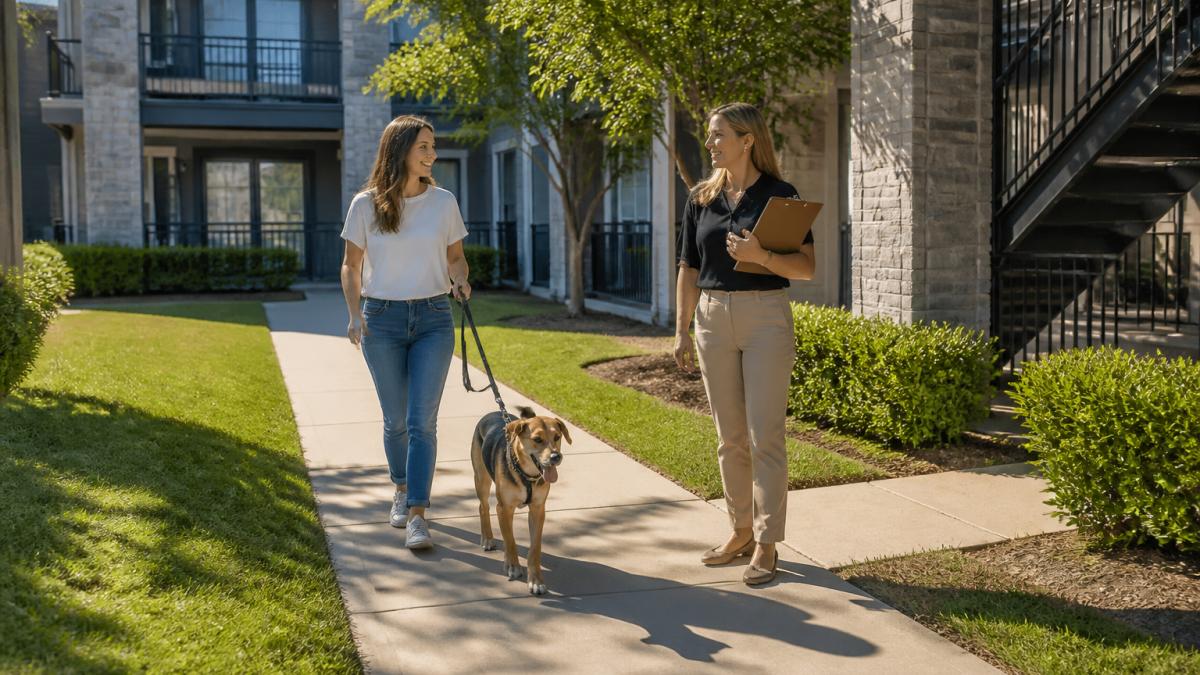
Bring the pet to the tour when the property allows it, and walk the actual route your dog would use every day. A floor plan looks different when you are holding a leash. Use this checklist to verify the policy and the physical space at the same time, so you leave the tour with answers instead of assumptions.
Policy and cost verification
- Get the pet addendum in writing, not a verbal summary
- Confirm the maximum weight per animal and whether it is per pet or combined
- Confirm the breed or mix exclusions and who sets the list (ownership or insurance carrier)
- Confirm the number of animals allowed in a one-bedroom versus a two-bedroom
- Write down the one-time pet fee, refundable pet deposit, and monthly pet rent
- Ask whether a second pet changes any of those amounts
- Ask how a mid-lease pet addition is handled
- Ask whether a verified assistance animal is exempt from fees and breed or weight limits
Physical space and daily routine
- Measure the closet and storage space against your pet supplies
- Walk the route from your door to the nearest outdoor relief area
- Check flooring in the unit: carpet holds odor, hard surface is easier to clean
- Look for a dog park or designated run on the property map
- Ask how maintenance enters the unit and whether pets must be secured
- Confirm the nearest park, walking route, and pet services
- Photograph any existing damage before signing anything
That last checklist item protects your deposit. Document the unit's condition on move-in day, with photos, and keep them.
If the leasing office cannot answer the policy questions on the spot, ask them to email the pet addendum and fee schedule before you apply.
Floor Plans, Amenities, and Storage for Renters With Pets
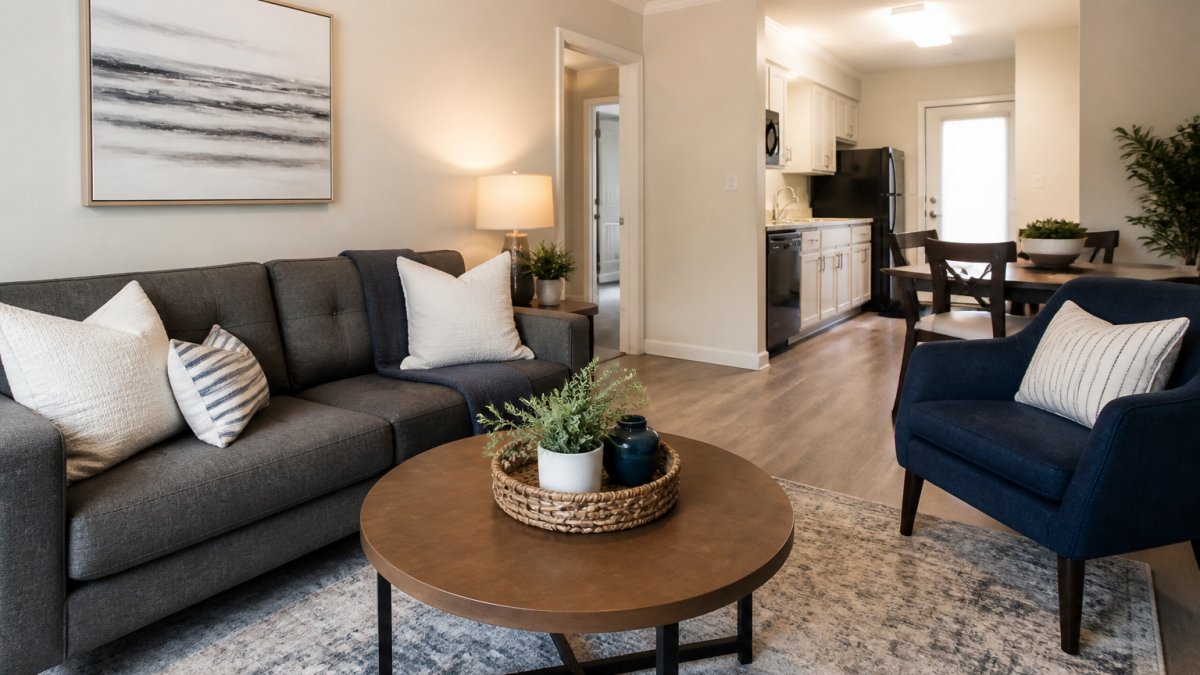
Renovated one-bedroom and two-bedroom apartment homes handle pets differently, and the difference is usually storage. A one-bedroom with spacious closets can absorb a crate, food bin, and litter setup. A two-bedroom gives you a dedicated room for the litter box or a quiet space for a nervous animal.
When you compare floor plans, weigh these features:
- Entryway space for leashes, bowls, and a mat
- Closet depth for storing bulk food and supplies
- Ground-floor access versus stairwells for older dogs
- In-unit flooring type and how it handles accidents
- Proximity to outdoor space and walking routes
Utilities included in rent change the math too. If water is bundled, frequent pet bedding washes cost you nothing extra. If it is metered separately, factor that in. Ask what is included and what is billed back.
Assistance Animals and Fair Housing Protections
Assistance animals are not pets under federal fair housing law, and that distinction carries real consequences for your application. The Fair Housing Act requires housing providers to make reasonable accommodations for residents with disabilities, including waiving pet fees and breed or weight restrictions for a documented assistance animal.
According to HUD's assistance animals guidance, a housing provider may request reliable documentation supporting the need for the animal, but may not charge a pet deposit or pet rent for a verified assistance animal. The request process differs from a pet application, and it is handled separately.
If you need an accommodation, submit the request to the leasing office in writing and ask what documentation they require. Do not assume a pet addendum covers it, because it does not.
Conclusion: How to Choose Pet Friendly Apartments in Lawton, OK
The hardest part of renting with a pet is not finding a listing that says "pets allowed." It is finding a property whose written policy matches what the leasing agent told you. Verify the breed list, the weight cap, the pet rent, and the maintenance process before you sign, not after.
At Highpoint Estate Apartments, we offer renovated one-bedroom and two-bedroom apartment homes with a straightforward leasing process and a resident-first management approach. Ask us for the pet policy in writing, walk the unit before you commit, and see how we handle questions during the tour. Schedule a tour with Highpoint Estate Apartments and compare the terms yourself.
Frequently Asked Questions
What apartments in Lawton allow pets?
Many rental communities in Lawton accept cats and dogs, but each one sets its own rules. When you search, filter for pet friendly apartments and then confirm the details directly with the leasing office: which species are allowed, how many pets per unit, weight limits, and any breed restrictions. Ask whether the community has a dog park or designated relief area, and request current availability in writing. A quick phone call or email before you tour saves you from applying somewhere that will not accept your pet.
How much do pet fees and pet rent usually cost?
Pet fees and pet rent vary by property, so there is no single number to plan around. Most communities charge a one-time nonrefundable pet fee, sometimes a separate refundable pet deposit, and a recurring monthly pet rent per animal. Ask for the exact amounts in writing before you apply, and confirm whether the fee is per pet or per unit. Budget for the total first-year cost, not just the deposit, since recurring pet rent adds up over a 12-month lease term.
What should I ask about a pet policy before applying?
Bring a written list of apartment pet policy questions to every tour. Ask about breed and weight restrictions, the maximum number of pets, whether caged animals or fish tanks count, and how pet violations are handled. Confirm the pet fees and pet rent, whether they are refundable, and what documentation you need, such as vaccination records or a veterinarian letter. Also ask about leash rules, designated relief areas, and whether renters insurance with pet liability coverage is required.
Can a landlord charge a pet fee for an assistance animal?
Under the federal Fair Housing Act, housing providers generally must make reasonable accommodations for assistance animals, including waiving pet fees, pet deposits, and pet rent that would otherwise apply. A request may require supporting documentation from a qualified professional. Rules differ for pets versus assistance animals, so clarify your situation with the leasing office early. If you believe a policy treats you unfairly, you can contact the U.S. Department of Housing and Urban Development (HUD) for guidance.